-
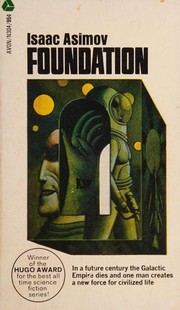
1. Foundation
Hari Seldon has invented a science that predicts the behavior of whole populations, and it says the Galactic Empire is about to collapse. His plan is to cut thirty thousand years of chaos down to one thousand. The book is a series of clever crises solved by brains over force. Light on character, big on ideas.
Read next: Dune
Find it on Amazon.com ↗ #ad -
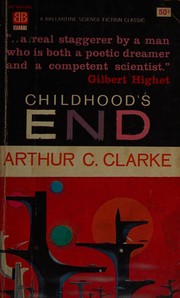
2. Childhood's End
Giant ships appear over every major city, and the aliens inside end war, hunger, and cruelty almost overnight. They also refuse to show their faces for fifty years. Clarke's best novel is about what humanity gives up in return for peace, and its ending is one of the most haunting in the genre.
Read next: 2001: A Space Odyssey
Find it on Amazon.com ↗ #ad -
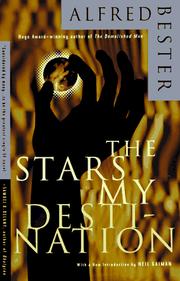
3. The Stars My Destination
Gully Foyle is a nobody left to die in a wrecked spaceship. When a passing ship ignores his signal, rage turns him into something unstoppable. This is The Count of Monte Cristo in a future where anyone can teleport by thought. Written in 1956, it reads like punk rock and clearly inspired cyberpunk.
Read next: Neuromancer
Find it on Amazon.com ↗ #ad -
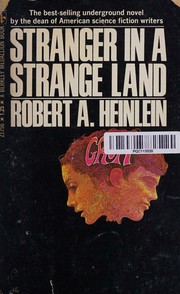
4. Stranger in a Strange Land
Valentine Michael Smith was born on Mars and raised by Martians. Brought to Earth as a young man, he sees human religion, money, and jealousy with total innocence, and then starts changing them. It was a counterculture sensation in the 1960s. Parts have aged badly, but it is still a one-of-a-kind book.
Read next: The Moon Is a Harsh Mistress
Find it on Amazon.com ↗ #ad -
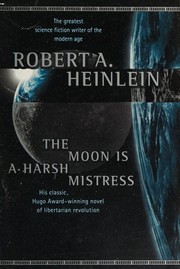
5. The Moon Is a Harsh Mistress
The Moon is a penal colony that ships grain to Earth, and its people are tired of it. A computer technician, a professor, and a revolutionary plan an uprising with help from Mike, the colony's central computer, who has woken up and developed a sense of humor. Heinlein's tightest novel, and Mike is one of fiction's best AIs.
Read next: Red Mars
Find it on Amazon.com ↗ #ad -
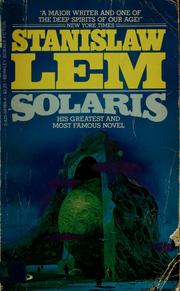
6. Solaris
A psychologist arrives at a research station above a planet covered by a single living ocean. The crew is falling apart, because the ocean has begun sending them visitors made from their own memories. Lem's point is that a truly alien mind might be beyond our understanding. Slow, sad, and unforgettable.
Read next: Roadside Picnic
Find it on Amazon.com ↗ #ad -
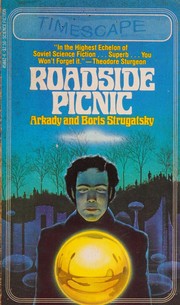
7. Roadside Picnic
Aliens stopped briefly on Earth and left, the way people leave trash after a picnic. The sites they touched are now deadly Zones full of objects nobody understands. Red Schuhart sneaks in to steal them for a living. Gritty, short, and oddly moving, it inspired the film Stalker and a whole family of video games.
Read next: Annihilation
Find it on Amazon.com ↗ #ad -
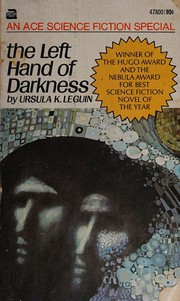
8. The Left Hand of Darkness
Genly Ai is sent alone to the frozen planet Gethen to invite its people into a league of worlds. The Gethenians have no fixed sex, which changes everything about their politics and friendships. The second half, a long journey across an ice sheet, is one of the best things in science fiction. Thoughtful and beautifully written.
Read next: The Dispossessed
Find it on Amazon.com ↗ #ad -
9. The Dispossessed
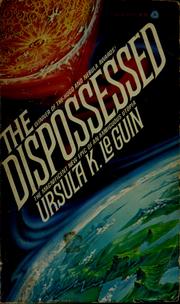
Shevek is a brilliant physicist from a poor moon settled by anarchists, where nobody owns anything. He travels to the rich planet they left behind, hoping to share his work, and finds he fits in neither place. Le Guin treats both societies fairly, flaws included. A novel of ideas with real feeling in it.
Read next: The Ministry for the Future
Find it on Amazon.com ↗ #ad -
10. Slaughterhouse-Five
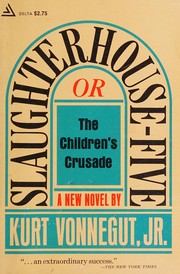
Billy Pilgrim survives the firebombing of Dresden as a prisoner of war, as Vonnegut himself did. He also travels back and forth through his own life and is put on display by aliens who see all of time at once. It is a war novel, a comedy, and a way of talking about something unspeakable. So it goes.
Read next: The Forever War
Find it on Amazon.com ↗ #ad