-
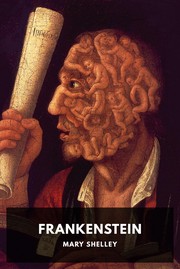
1. Frankenstein
Forget the movie monster with bolts in his neck. Shelley's creature is intelligent, lonely, and furious at the man who made him and walked away. It reads as a tragedy about responsibility more than a horror story. Best for readers who want to see where the whole genre began, and who don't mind some old-fashioned prose.
Read next: Do Androids Dream of Electric Sheep?
Find it on Amazon.com ↗ #ad -
2. The Time Machine
Barely a hundred pages, and it still sets the pattern for every time travel story since. Wells sends his traveler far into the future to find gentle, childlike people living above ground and something much worse living below. A quick, eerie read with a sharp point about class. A perfect first classic.
Read next: The War of the Worlds
Find it on Amazon.com ↗ #ad -
3. The War of the Worlds
The original alien invasion, told by an ordinary man trying to stay alive as Martian war machines cross the English countryside. What makes it hold up is how helpless everyone is. Wells wrote it partly to show an empire what being colonized feels like. Fast, tense, and darker than you might expect.
Read next: Childhood's End
Find it on Amazon.com ↗ #ad -
4. Twenty Thousand Leagues Under the Sea
A professor, his servant, and a harpooner are taken aboard the Nautilus, a submarine decades ahead of its time, by the brilliant and bitter Captain Nemo. It is part adventure and part tour of the ocean. Expect long lists of sea life, but also a giant squid and one of fiction's great antiheroes.
Read next: Rendezvous with Rama
Find it on Amazon.com ↗ #ad -
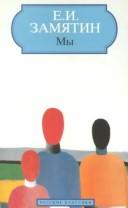
5. We
Written in 1920s Russia and banned there for decades, this is the first great dystopian novel. An engineer in a city of glass walls, where every hour is scheduled, keeps a diary that slowly fills with doubt after he meets a woman who breaks the rules. Short, strange, and poetic. Read it to see where Orwell and Huxley got their ideas.
Read next: Nineteen Eighty-Four
Find it on Amazon.com ↗ #ad -
★ LK's pick
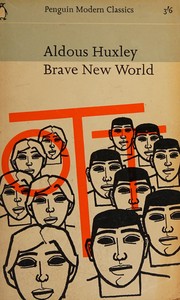
6. Brave New World
Huxley's future has no secret police because it does not need them. People are grown in bottles, sorted into castes, and kept happy with a drug called soma and endless entertainment. Then an outsider arrives who was raised on Shakespeare. Many readers find it more believable, and more uncomfortable, than Orwell.
Read next: The Handmaid's Tale
Find it on Amazon.com ↗ #ad -
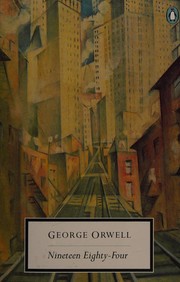
7. Nineteen Eighty-Four
Winston Smith rewrites history for a living in a state that watches everyone and changes the truth as it pleases. He starts a diary and a love affair, both of them crimes. The book gave us Big Brother, doublethink, and the thought police. It is bleak, but it is also a gripping story, and it still feels current.
Read next: Brave New World
Find it on Amazon.com ↗ #ad -
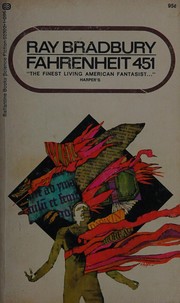
8. Fahrenheit 451
Guy Montag is a fireman in a future where firemen start fires, and what they burn is books. A curious neighbor and one stolen volume are enough to crack his certainty. Bradbury writes in a rush of images, and the book is short enough for one sitting. It is as much about distraction as about censorship.
Read next: The Martian Chronicles
Find it on Amazon.com ↗ #ad -
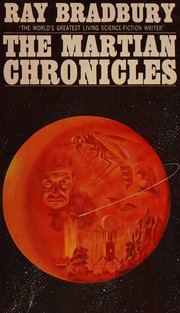
9. The Martian Chronicles
Not a novel so much as a chain of stories about people from Earth arriving on Mars, and what they do to the Martians and to themselves. Some are funny, some are ghost stories, and a few are quietly heartbreaking. The science is nonsense and it does not matter. Read it for the mood and the writing.
Read next: Red Mars
Find it on Amazon.com ↗ #ad -
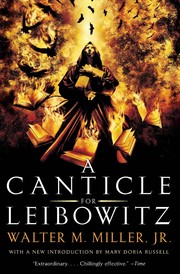
10. A Canticle for Leibowitz
After a nuclear war, an order of monks in the Utah desert preserves fragments of old science they no longer understand, including a holy relic that is really a shopping list. The story covers eighteen centuries in three parts. It is funny, sad, and wise about how civilizations forget and repeat themselves.
Read next: Station Eleven
Find it on Amazon.com ↗ #ad